
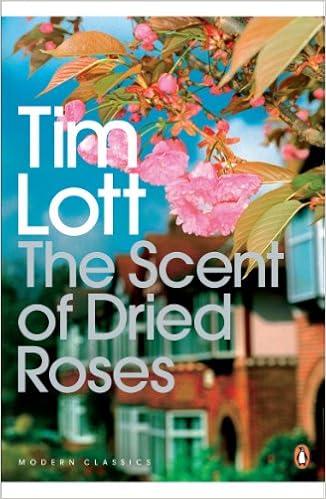
I was addicted to the Family column in The Guardian written by an author of considerable repute called Tim Lott. I got down to reading his weekly column after I had read his memoirs titled The Scent of Dried Roses. Tim Lott’s Memoirs are a moving reflection of a family on the frontiers of happiness and unhappiness.
A very honest account of lives of a few people told by an insider as their home quietly battles the malaise of unhappiness and depression.
I moved on to reading some other books of Tim Lott, and as I had acquainted myself to his writing through his memoirs I felt a personal connect with his writings. The bandwidth of the subjects for his column was always intimately close to what majority of the families experience at some point in time. In his columns he would share what afflicts human life in raising and running a family; issues which we all experience but sometimes decide to remain discreetly silent about or find it difficult to express.
His candor by his own admission stemmed from his memoirs finding a large audience and money; apart from literary recognition too. In his columns Tim Lott discussed issues related to raising children, education system, intimacy issues, and the role of parents, love and hurt in relationships…but after penning his columns and penning what was happening in his personal life and recording it in his columns for six years decided to go silent last month. Stories which highlight human frailties are not what people like to read …Mirror is not always a good friend.
This line penned by Tim Lott:
‘We are all flawed and the more we are able to admit it, the more we might see our common humanity’
is an important value system to aspire for. But he had to go silent because in a technology enabled internet world where unfiltered and unregimented feelings and comments can reach the author with the speed of light and stay for all times as a record of admission; and as the writer wrote in his last column
Much of the downside of writing such a column now is the brutality of some of the below-the-line commentary. It hurts.
The honesty with which the inner mechanisms of life are revealed need a sensitive hearing and understanding but the prevailing truth is people like happy stories, stories of bravado, false hope, courage, faith and not stories which will walk us down the path which may be a little stormy, difficult sometimes and stories of lives on the lookout for the elusive joy.
Understanding real troubles and issues are not necessarily a good read. It takes courage to write with candor and it requires maturity to reflect on such writings. If a writer is bludgeoned with sharp comments; community loses a link which may help in understanding what ails it. Tim Lott’s writings will be missed; it is not easy to battle existential issues of life and reflect on them; and this is what Tim Lott did supremely well.